Double Bowl Kitchen Sinks: Stainless Steel Vs Granite Composite Vs Fireclay
If your daily meal prep feels more like a battle in a war zone than a culinary experience, your workstation is likely the culprit. A dual-sink kitchen setup provides essential multitasking by separating prep work from cleanup. However, before you install that new double-bowl kitchen sink, you must navigate the complex landscape of materials to find the one that fits your lifestyle. Let's break down the top contenders.
The Industrial Standard: Stainless Steel
The double bowl SS kitchen sink remains the undisputed heavyweight champion of the culinary world, defining the modern workhorse by balancing affordability with industrial durability.
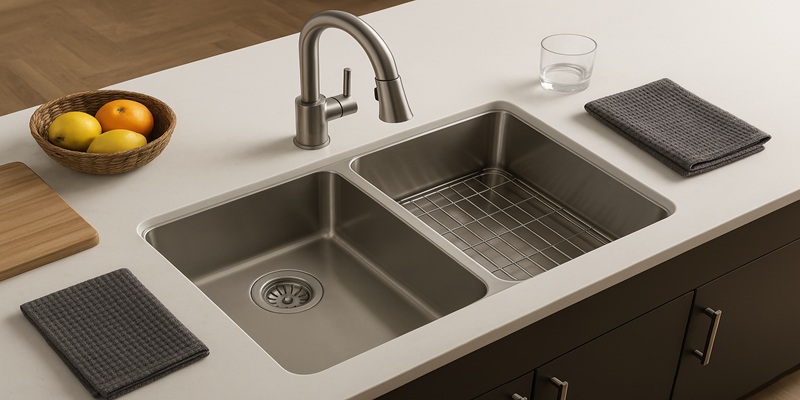
When selecting a double bowl stainless steel sink, your eyes should go straight to the technical specifications, specifically the "gauge." This measures the thickness of the metal; remember that a lower number equals thicker steel.
For a robust fixture that won't flex under the weight of a water-filled stockpot, choose 16- or 18-gauge rather than the thinner 22-gauge often found in budget rentals. A 16-gauge model offers superior longevity and a more solid feel during daily use.
Noise control is another critical factor to consider in your selection process. Stainless steel is naturally resonant, meaning a dropped spoon can clang loudly enough to startle the household. Ensure your choice includes sound-deadening rubber pads or a heavy spray undercoating to dampen these vibrations.
The advantages here are significant: these sinks are heat- and rust-resistant (especially the 300 series, which contain 18/10 chromium-nickel), and highly hygienic.
However, they aren't without quirks. They are prone to developing a fine-scratch patina over time and can show water spots if not dried immediately.
If you are looking for a utilitarian solution where performance justifies the price, this is your starting point.
The Modern Composite: Granite
For a sleek, contemporary upgrade, the granite composite double sink offers a sophisticated alternative to metal.
This material is an engineering marvel, created by compressing natural crushed quartz (typically around 80%) with durable acrylic resins. The result is a rock-hard surface that captures the resilience of stone while eliminating the sealing maintenance issues associated with solid rock blocks.
It's a perfect double-basin kitchen sink for busy families who need durability without the fuss.
This is where you can make a substantial statement. The manufacturing process enables deep, rich colors with UV inhibitors to prevent fading, creating a matte double-bowl black kitchen sink, the ultimate focal point for a modern aesthetic.
Beyond looks, the durability profile is distinct. Because the color runs through the material, deep scratches are less visible, though the high quartz content makes it difficult to scratch in the first place.
It is non-porous, repels stains, and withstands high heat, with heat resistance often exceeding 500°F.
However, that incredible hardness is a double-edged sword. While the sink itself is tough, it is unforgiving to your dishware; dropping a glass on this surface usually results in immediate shattering.
Additionally, dark composite sinks can develop a white haze from calcium deposits if you have hard water, which may require occasional treatment with mineral oil.
While rare, the material can also crack under extreme thermal shock, unlike steel, which would merely dent. This is the material for the homeowner who values texture and modern aesthetics over raw industrial resilience.
The Artisan Choice: Fireclay Sinks
If your design vision leans toward a timeless, heritage aesthetic, the fireclay double sink is likely the centerpiece of your renovation mood board.
Unlike the industrial precision of stainless steel or the engineered uniformity of granite composite, fireclay is defined by its organic, handcrafted appeal and lustrous finish. This material is created by molding ceramic clay and fusing it with a porcelain glaze at extreme temperatures—often exceeding 1,600 degrees Fahrenheit.
This process results in a deep kitchen sink with a glossy, non-porous surface that is exceptionally hygienic, easy to wipe clean, and resistant to fading over decades of use.
However, this artisanal beauty comes with specific caveats you must plan for. Fireclay is heavy, often requiring reinforced cabinetry to support the weight of a full double-bowl sink.
While the glaze is hard, the underlying ceramic is brittle. According to standard ceramic engineering principles, fireclay offers superior gloss retention and surface hardness. This rigidity means it lacks the elastic "give" of metal. Unlike steel, which absorbs the shock of a dropped pan, fireclay resists until it breaks.
If you frequently handle heavy cast-iron cookware, the risk of chipping the rim or cracking the basin is a reality you must consider.
Because fireclay shrinks during the kiln process, dimensions can vary by up to 2%, meaning your countertop installer must have the physical sink on-site to cut the opening accurately.
Material Showdown: Price, Stain, And Scratch Analysis
Now that we have examined the specific properties of the top three contenders, it is time to conduct a direct comparison. Whether you are installing a high-end double-faucet kitchen sink to accommodate two cooks or selecting a rugged double-bowl laundry sink for a utility room, your decision should depend on how you prioritize your household's specific behaviors within your budget.
Here is how Stainless Steel, Granite Composite, and Fireclay compare across three critical categories:
• Price and Budget: Stainless steel remains the undisputed leader in affordability and value.
You can secure a durable, high-gauge steel sink for a fraction of the cost of alternatives, typically starting at $200-$300 for quality models.
Granite composite falls in the mid-range ($400-$800) and offers a premium, stone-like appearance that adds value to a home without the exorbitant price tag of natural stone.
Fireclay represents the luxury tier. Due to the labor-intensive kiln process and high manufacturing rejection rates, these sinks command the highest prices, often costing twice as much as a high-quality composite unit and frequently exceeding $800 to $1,000.
• Stain Resistance: If low maintenance is your priority, the fireclay double sink wins with its glass-like glaze.
It is completely non-porous, meaning tomato sauce, coffee, and wine wipe away without a trace.
Stainless steel is also non-porous and resistant to chemical staining, though it is prone to water spots and fingerprints.
Granite composite is highly resistant, but not invincible.
Depending on resin quality, lighter colors can occasionally absorb strong dyes if left too long, while darker colors may show limescale buildup.
• Scratch and Impact Resistance: In terms of hardness, Granite composite takes the gold.
Composed mainly of quartz—which sits at a seven on the Mohs hardness scale—it is tough to scratch. You could accidentally drag a knife across it with little consequence.
Stainless steel is distinct; it is softer and will scratch (developing a patina), but it is virtually indestructible regarding impact. It will dent, not crack.
Fireclay falls in a precarious middle ground: its glaze is hard and scratch-resistant, but the material is brittle. A heavy blow from a pot can chip the finish or crack the ceramic body, requiring expensive repairs.
The Final Fit: Installation Styles
Selecting the right material is only half the battle; how your sink integrates with your countertop is equally crucial for your kitchen's workflow and aesthetic. The debate usually centers on two distinct configurations: undermount versus drop-in, each offering specific benefits depending on your renovation goals.
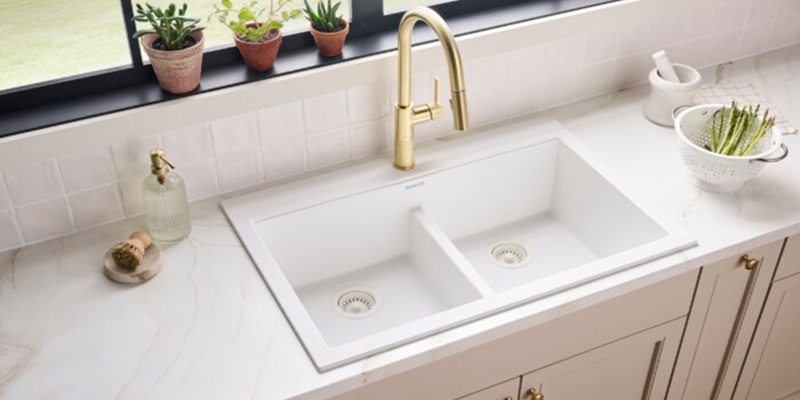
A double bowl undermount kitchen sink is the hallmark of modern, high-end kitchen design. By mounting the basin directly beneath the countertop, you achieve a seamless flow from the prep surface to the wash area. This absence of a surface lip allows you to wipe crumbs, water, and spills directly into the sink without obstruction, making it the superior choice for hygiene. However, this style generally requires a solid countertop material—such as granite, marble, or quartz—that can support the sink's weight via clips or adhesive. A double-bowl undermount sink installation also allows for a "negative reveal," where the countertop slightly overhangs the sink edge, hiding the silicone seal for a cleaner look.
On the other hand, a double-bowl drop-in kitchen sink (or top-mount) is installed in a cutout, with the rim resting on the countertop. This is the traditional standard and is often the most cost-effective and easiest installation method, compatible with virtually any countertop material, including laminate. The trade-off is the raised rim, which disrupts the surface's visual continuity and can accumulate grime or water deposits, requiring more diligent cleaning to keep the seal pristine.
For homeowners who want future-proof flexibility, a dual-mount kitchen sink features a flat rim that supports both installation types. This allows you to purchase the sink now and decide on the mounting style later, depending on your final countertop choice..
Final Takeaway: Upgrading Your Kitchen Workflow
Your kitchen sink is the workhorse of your culinary space, and the material you choose dictates its longevity, maintenance, and overall vibe. If your priority is professional-grade utility and heat resistance, stainless steel remains the champion. For those seeking unmatched durability and scratch resistance, granite composite is the superior option, particularly if you are eyeing a trendy black double-bowl kitchen sink to anchor your modern aesthetic. Finally, for a timeless, farmhouse appeal that makes a statement, fireclay is the clear winner.
Assess your cooking habits, budget, and design goals, then browse our latest collection to find the perfect double bowl sink that balances form and function for your unique lifestyle.