Is A Counter-Depth Refrigerator Worth It? Pros And Cons
Are you tired of your bulky cooling appliance dominating the kitchen and awkwardly protruding past your cabinetry? It creates a visual bottleneck and ruins the clean lines of your home. The solution is a counter-depth refrigerator, also known as a cabinet-depth refrigerator. This sleek upgrade instantly transforms your kitchen's profile, offering a custom look without a renovation. But is the aesthetic upgrade worth the premium price? Let's analyze if this investment makes sense for you.
What Defines a Cabinet-Depth Refrigerator?
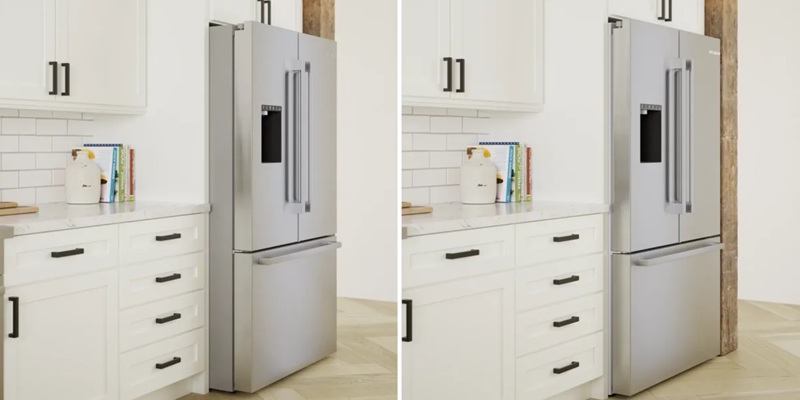
To understand the hype, we must look at the tape measure. A standard fridge typically requires 30 to 34 inches of depth, often leaving a massive 6-inch gray box protruding into your walkway. In contrast, a shallow-depth refrigerator trims this profile to 23 to 27 inches (excluding handles), aligning virtually flush with standard countertops. This offers that coveted "built-in look" previously reserved for five-figure luxury units, but at a fraction of the cost.
Whether you are eyeing a wide-counter-depth French-door refrigerator for maximum shelf width or a counter-depth side-by-side refrigerator for vertical freezer organization, the premise remains the same: streamlined integration. These units stop the appliance from feeling like an intruder in your cooking space. But does a sleeker look mean sacrificing performance? Let's look at the trade-offs.
Weighing The Pros And Cons Of a Counter Depth Fridge
Integrating a slimmer unit fundamentally alters both the ergonomics and the visual weight of your kitchen. The most immediate benefit is improved traffic flow.
In modern open-concept layouts, particularly those featuring kitchen islands, the four to six inches reclaimed by these units can be the difference between a comfortable walkway and a congested bottleneck.
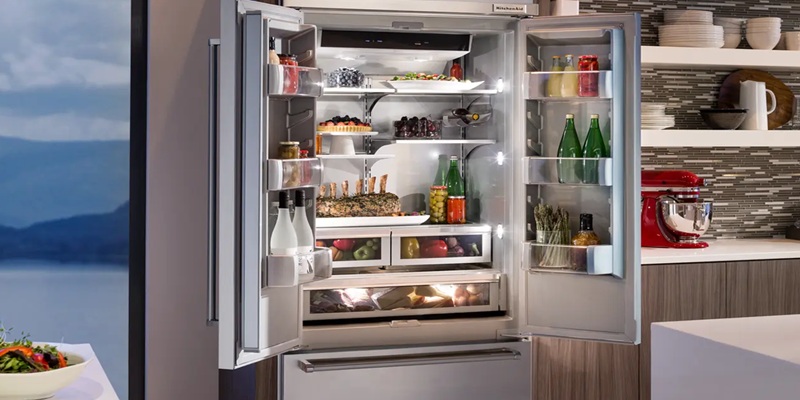
Beyond the footprint, there is the often-overlooked advantage of accessibility. With a shallower chassis, nothing gets lost in the dark abyss typical of standard models; you can see and reach everything instantly, which significantly reduces food waste.
This streamlined depth pairs beautifully with modern finishes to create a cohesive look. Whether you choose a matte white counter-depth refrigerator for a clean, Scandinavian vibe or a black counter-depth refrigerator to anchor an industrial design, the appliance recedes into the cabinetry rather than shouting for attention.
However, this refinement comes with specific caveats that buyers must weigh carefully.
First, there is the "miniaturization tax." Manufacturers often charge a premium for the engineering required to fit standard cooling power and insulation into a tighter shell. Consequently, you will likely face a higher price per cubic foot.
You also need to be hyper-aware of installation constraints. Because the box sits flush with your counters, the doors usually require a specific hinge clearance to swing past adjacent cabinetry. If the crisper drawer isn't measured correctly, you may be unable to open it fully.
Despite these logistical hurdles, data indicate that the market prefers the sacrifice. According to recent kitchen design surveys, the shift toward seamless lines and "hidden" appliances is a dominant trend, suggesting that, for many, the visual and spatial gains justify the premium price tag.
Capacity Reality Check: Standard Vs. Counter-Depth
When transitioning to a streamlined kitchen design, the primary source of consumer anxiety is the reduction in storage space. It is crucial to analyze the raw data objectively before making a purchase.
A standard-depth refrigerator typically offers 26-28 cubic feet of storage, but it comes at the cost of the unit protruding significantly into the kitchen workspace.
In contrast, a counter-depth refrigerator typically ranges from 20 to 23 cubic feet. On a spec sheet, this appears to be a drastic reduction—approximately 20 percent less space for your groceries.
However, the argument for the counter-depth form factor lies in usable space versus theoretical space. Standard fridges are often 30 to 36 inches deep, creating a "black hole" effect where leftovers, condiments, and produce are pushed to the back, forgotten, and eventually spoiled.
The shallower, 24-inch box of a counter-depth fridge forces a more organized inventory; every item is visible and accessible without deep excavation.
For a household of two to four people, this layout is often more efficient than a larger, deeper unit because it minimizes waste and clutter.
That said, large families or bulk buyers must be realistic: if you require substantial on-hand stock, you will likely need to supplement this appliance with a secondary freezer in the garage.
Once you view the size difference as an efficiency upgrade rather than a capacity loss, the next step is to select the appropriate manufacturer to execute the design.
Best Brands: LG, GE, Samsung, and KitchenAid Compared
The landscape of high-end counter-depth refrigeration is dominated by four distinct philosophies: LG, Samsung, GE, and KitchenAid. For the discerning buyer, the choice is rarely about "good vs. bad," but rather about which feature set aligns with your lifestyle.
LG has focused heavily on feature density and user experience. They are currently the brand to beat regarding internal amenities, particularly for those who value specialized beverage cooling. Their implementation of the Craft Ice maker, which creates slow-melting spherical ice, combined with their InstaView door-in-door technology, positions them as the top choice for tech-savvy entertainers. If your priority is a counter-depth refrigerator with an ice maker that elevates your hosting game, LG is worth serious consideration.
Samsung offers a different value proposition centered on modular customization. Their Bespoke line has revolutionized kitchen aesthetics by offering flat-panel doors in customizable colors and finishes. This allows the appliance to disappear into the cabinetry or stand out as a piece of pop art, rather than acting as a generic stainless steel box. For homeowners obsessed with interior continuity and modern lines, Samsung’s design-first approach is unmatched.
Conversely, GE (specifically the Profile and Café lines) and KitchenAid appeal to the "pro-style" enthusiast. These brands prioritize a robust, commercial look—characterized by knurled handles, stainless steel interiors, and heavy-duty shelving. While they may lack the Wi-Fi screens found on Korean models, their argument rests on perceived durability and classic American kitchen aesthetics. The decision ultimately pits reliability and tactile robustness against innovative features and modern flexibility.
How To Choose The Right Counter-Depth Refrigerator Size
Before you authorize that transaction, you need to get intimate with a tape measure. The most common source of confusion with a counter-depth refrigerator is the terminology itself.
"Counter depth" strictly refers to the refrigerator's case or box, which is designed to be approximately 24 to 25 inches deep to match standard cabinetry. The doors and handles will almost always protrude past the counter's edge; if they didn't, the hinges would bind against the adjacent wood, and the doors wouldn't open.
While the 36 counter-depth refrigerator is the undisputed industry standard—offering the best balance of internal storage and external symmetry—it isn't the only option. For galleys in older homes or compact urban layouts, a 33-inch or 30-inch counter-depth refrigerator maintains a seamless look without dominating the room.
Here is the crucial part: measure the "cutout" space, not your old fridge. Leave at least an inch of overhead clearance for ventilation. Finally, simulate the door swing. If a wall flanks the unit, ensure there is enough clearance for the door to open more than 90 degrees; otherwise, you will not be able to remove your vegetable drawers for cleaning.
Beyond width, ventilation is the most critical technical detail to verify before purchasing. While many modern counter-depth refrigerators are marketed as “built-in friendly,” not all are truly front-vented. Some models exhaust heat from the front toe-kick, allowing a tighter installation, while others still rely on top or rear ventilation. Even with front ventilation, most manufacturers recommend leaving approximately 1 inch of clearance above the unit to ensure proper heat dissipation. Ignoring these requirements can reduce cooling efficiency and shorten the compressor's lifespan, especially in narrower 30-inch and 33-inch installations where airflow margins are tighter.
Noise level is another factor that becomes increasingly important in open-concept kitchens, studio apartments, and smaller homes. Counter-depth refrigerators generally operate in the quiet range, but their shallower cabinet can make compressor cycles, ice makers, and internal fans more noticeable in shared living spaces. In an apartment or studio, these intermittent sounds may be more apparent than in a closed kitchen. If your refrigerator is located near a living or sleeping area, check the manufacturer’s stated decibel rating or choose models known for quiet compressor operation to ensure everyday comfort is not compromised.
The Final Verdict: Elevating Form and Function
Ultimately, switching to a counter-depth refrigerator is about more than reclaiming floor space; it is about elevating the flow and finish of your kitchen. The trade-off in cubic footage is minimal compared to the ergonomic and visual upgrade. It stops being an appliance that obstructs traffic and becomes part of the architecture. Now that you have the correct specs, grab your tape measure, confirm your cutout dimensions, and browse the latest models. It is time to stop bumping into your fridge and start enjoying your kitchen.